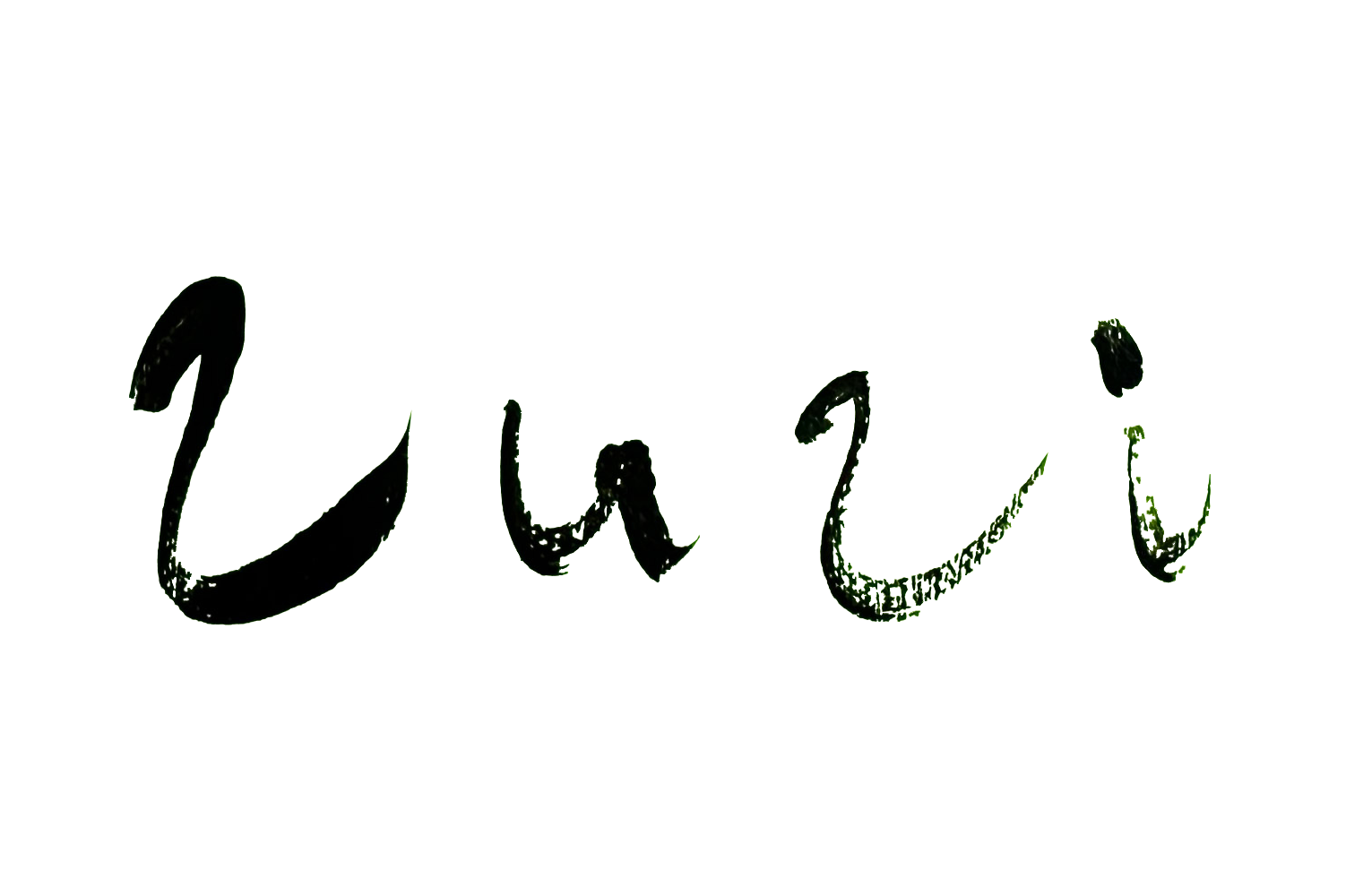
In Conversation with ZuZi
Interview by Pierre-Alexandre Mansard
Published on the occasion of Behind the Gazes, Eternity Gallery, Geneva, January 2026
As a former street photographer, when and how did your transition to painting take place? What particularly draws you to this medium?
I have been interested in drawing since I was young, but being an artist wasn't really an option for me in Turkey.
When I moved to Los Angeles to learn English, I started doing street photography because I was inspired by artists like Saul Leiter and Henri Cartier-Bresson. I was also taking some painting and digital classes in LA, but I was still unsure about my medium.
It wasn't until I moved to Miami and began learning from classically trained painters that I found the freedom to truly express myself. Painting lets me explore memory and feelings in ways that photography didn't. It allows me to show not just what I see, but how it feels.
Do you see painting as another way of capturing the ephemeral, or rather as a counterpoint to the photographic snapshot?
Street photography is like catching magical, fleeting moments. It is very much an external activity of looking and wondering.
Painting is different because it comes from within. To me, making a painting is almost like having a nice, long conversation with a friend. It doesn't try to freeze time like a photograph. The image can change as I work, because the painting tells me what it needs.
What inspires you to create?
When I moved to the United States, I finally had the chance to focus on art. As a quiet and reserved person, I realized that painting gave me a voice. It allowed me to connect with people in a way that words could not.
I am also inspired by how art bridges time. When I look at paintings from the past, I feel like the artist is speaking directly to me. I want my work to create that same connection with others.
Which artists or works have been important in shaping your artistic approach?
I am influenced by artists like Vincent Van Gogh, Jean Dubuffet, and Philip Guston. I admire them because they are not afraid to be raw. They show that a painting doesn't have to look 'correct' or 'perfect' to be true.
I also love how they mix humor with serious feelings. That balance is very important to me. I want my work to have that same kind of directness and honesty.
What is your creative process, from the initial idea to the completed work? Do you have any rituals or specific methods when you work?
I rarely start with a fixed plan. I usually begin with a simple feeling or something I saw that day.
I keep the brushstrokes loose and free, but I am very intentional about the eyes. The moment I paint the eyes looking in different directions, the character truly arrives.
I know a work is finished when the emotion feels real. I am not interested in perfection; I am interested in honesty.
Do you prefer silence, or on the contrary, do you need a certain effervescence around you in order to create?
I prefer a calm environment. I usually listen to music, but I need to be alone in the studio. I need to close the door to the outside world so I can truly focus.
At what point do you consider a work to be truly finished?
I stop when the painting feels alive. It is a gut feeling. If I keep working just to make it look 'perfect,' I lose the energy. I would rather stop while the emotion is still fresh, instead of overworking it and making it feel stiff.
Do the characters that appear in your paintings have an autobiographical dimension, are they drawn from your surroundings, or do they stem from your imagination?
I don't know where my characters are born from, be it emotions, passing thoughts, or brief moments of awareness. Perhaps they are influenced by small gestures and silent encounters I notice in everyday life.
The gaze plays a strong role in your work. Is there a particular meaning behind the fact that your characters often have their eyes directed in opposite directions?
Yes, this is central to my idea of "Bilocated Presence".
In the past, a model would sit and look at the painter, fully present in one place. Today, we are rarely like that. We are physically here, but our minds are often somewhere else.
The eyes looking in different directions are not about confusion. They reflect this split. One eye looks at the physical world, while the other looks toward a digital space or elsewhere. It's my way of painting how we live now, between two realities at the same time.
What role do titles play in your work, and how do you develop them?
My work often has a light and humorous tone. The title is there to highlight that. I believe humor has the power to break the 'Bilocated Presence.' It demands your full attention. It snaps you out of the distraction and brings you completely back to the present moment.
How do you experience the relationship that collectors may form with your works once they have left the studio?
The work no longer belongs to me. It has its own life to live.
When a collector chooses a piece, maybe they are recognizing a part of themselves or something important to them. It creates a silent bond between us. Even if we never meet, we have shared a moment of understanding through the canvas. Knowing that the conversation continues in their home makes me feel that the work is truly complete.
Finally, how do you envision the evolution of your work in the years to come? Will figuration remain central, or do you see yourself exploring other forms or medium?
Figuration feels like a natural language for me, and I don't see it disappearing. At the same time, I'm open to change. I'm interested in letting the work evolve intuitively allowing new forms, materials, or approaches to enter when they feel necessary. I'm happy to listen to the work itself and follow where it wants to go.
Published in Behind the Gazes, Eternity Gallery, Geneva, 2026